Where does AI work go after you make it?
A live conversation about making a team good at AI: what happens to the things people make with it, who is allowed to make them, and why signing a long contract with any one vendor right now is a bet against yourself.
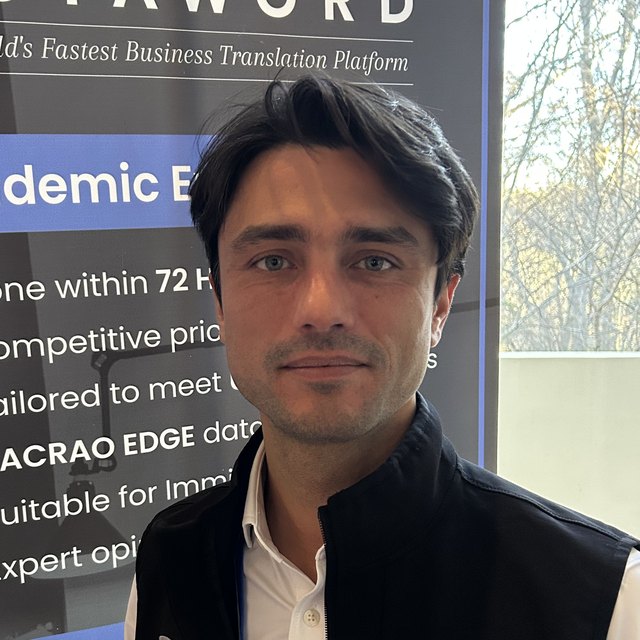
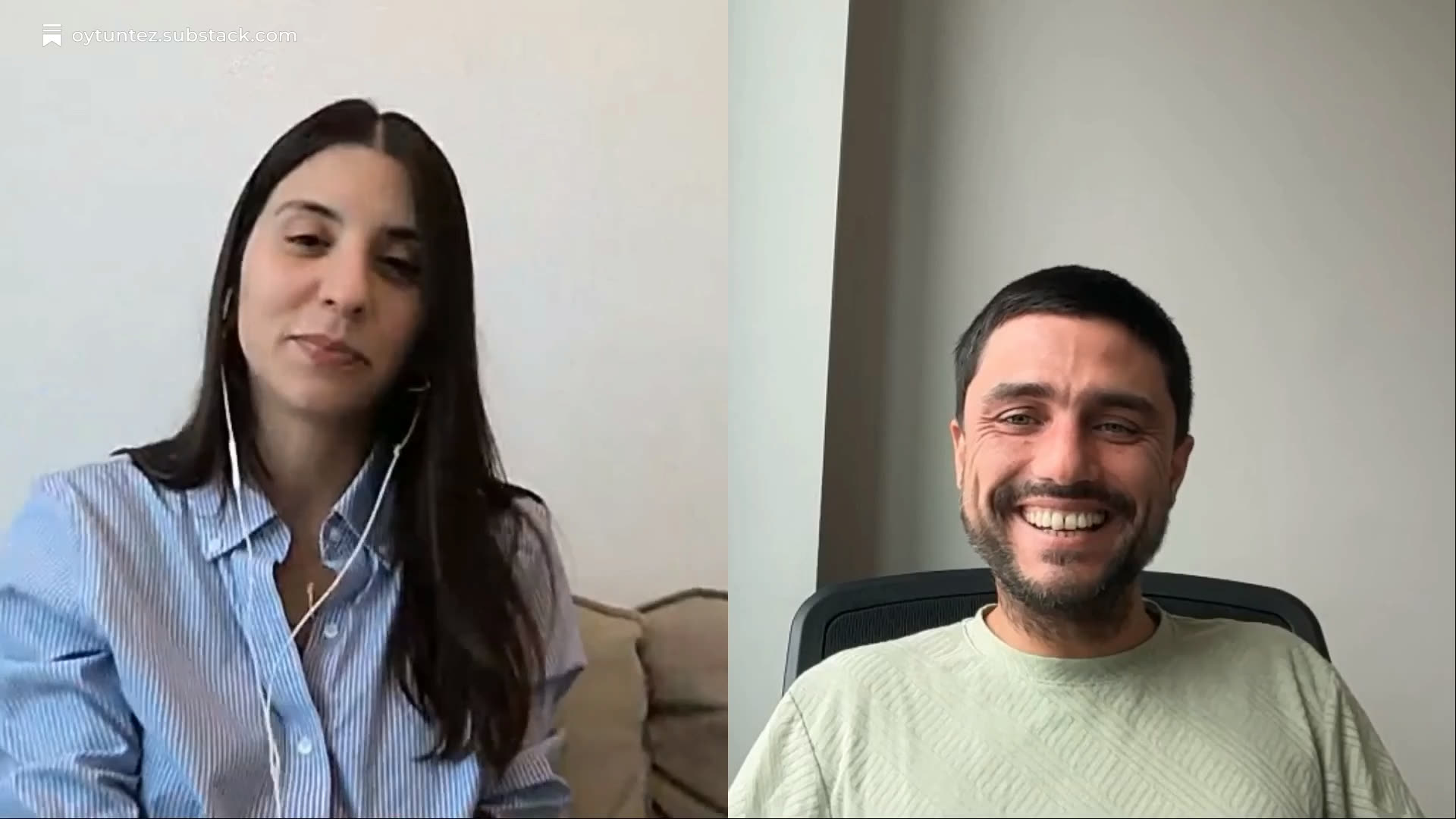
Oytun Tez, Founder, Runwork, in conversation with Elif Polat · 36:22
 Substack
 The prototype used to take an army of engineers
Elif Polat: ...95% of what people want from AI is automation. But the difference is you used to need an army of software engineers to first build a prototype that would take maybe three to four months. And then that would have a designer in it, that would have a back-end engineer, front-end engineer, and a business person. You would sit down and meet for a couple of months to come up with a prototype. And then you would sit and test it. And that was the process. And that shrunk between you and large language model. The business person and the large language model can do it between themselves within a day.
Then what do I do?
Elif Polat: ...But then what? Then what do I do? I know I found a solution. I built the prototype. Then what?
Oytun Tez: Well... Today, usually in a regular AI experience, those solutions are usually stuck in your computer, first of all. I think that's the first barrier in this AI nativeness. You build a small automation, maybe Claude will output some HTML artifact for you, but it's stuck in your computer in your download folder.
Elif Polat: So I'll deploy it to Vercel or it'll live there until I forget about it.
Oytun Tez: Yeah, exactly. Maybe you share it as a zip file with your teammates and they're not really going to be able to open it anyway or run it. I think once these people know how to ask questions and start getting some solutions from the AI, especially for automations or small tools, they're going to need this centralized cloud for their team so that all of these solutions, the teachings you do with your AI, the automations as integrations, et cetera, they're going to need this team environment to exist so that other teammates can go use them and even update them, improve them on a continuous basis.
Code is not knowledge
Oytun Tez: ...and integrations. Those real tangible outputs of code need a place to go. And that's not knowledge. Code is not knowledge. Code is a structure, is a process. So those processes need somewhere to go that's going to be accumulated for the whole team.
You cannot sign a five-year contract with a baby
Oytun Tez: ...And now people are facing this question. Am I going to sign a contract with Anthropic and the Claude Desktop interface? And am I going to keep everything there? But then next week, a new model is going to come or a new interface is going to come one tenth of the price. Like, what am I going to do now? This is not only just about cost saving, actually. This is also about having access to the newer, better tools all the time. The AI market right now is crazy. New tools are popping up every day, every week. And if you're signing a contract with a single provider, then you're kind of You know, not AI native anymore. You behave like an adult that, you know, not going to update themselves. But AI is a very little baby right now. So you cannot treat the AI market like it's a very mature adult market that you can sign five year contracts. That's not reality.
31 skills in three weeks, after three years of waiting
Oytun Tez: ...But then until last week or two weeks ago, Copilot didn't have a Cowork experience.
Elif Polat: My God, Cowork revolutionized my life at work. Thank god I for the first time in three years I am able to build ship things without the need to sit in meetings with the IT team for hours and hours and trying to convince them that I've built 31 skills in the past three weeks and 20 something of them are now in use by almost one third of my team. And some of them are in use by like half of my team. And it's been revolutionary.
Oytun Tez: I can imagine. And then I ask your managers, why did you guys not give this lady the Cowork environment for three years?
Elif Polat: Because it's expensive. They're expensive. They're not cheap. They're not cheap.
Oytun Tez: You guys had to wait for Microsoft to bring that feature to your environment for three years. That's the anti-AI native behavior I'm talking about here. You need to free your team to discover new tools, to use new tools.
It is party time for IT people
Elif Polat: ...I have a lot of opinions about how IT should change, but I'll leave it to you.
Oytun Tez: I think it's party time for IT people. You know, IT departments have been managing so many annoying things in companies, you know, all kinds of integrations, connect SAP to Workday and handle these workflows and their stability and retry this workflow, failure cases, etc. They were asked to do so many small and according to them useless automations by business people. They always try to allocate the right time, right budget for these not so fun problems. But now some of these problems can just be automated by the person who has that problem. That business person, the sales person, the customer success person can now just go and Get it done. I think my biggest wish from IT departments is to enable these business people to do more of these vibe coding, the automations, the integrations, etc. So that the IT people can focus on more nerdy things, more technical, more challenging things. Rather than everyday automations, everyday business solutions, etc. We're not there anymore.
The Google Drive of your team's AI work
Elif Polat: ...The craziest possible shoot that you have.
Oytun Tez: About Runwork, the craziest thing I think, I want Runwork to invent something called system of records for AI work, AI capability of the teams. So I want Runwork to Google Drive or Amazon S3 storage of this AI work output done by the teams. I think that's the craziest thing I'm imagining every day right now. And I'm sending energy to the universe and spending tens of hours every day. Okay, not tens of hours, but maybe 12, 16 hours every day.
Elif Polat: That doesn't sound crazy enough to me. That sounds very doable. Knowing you, I don't doubt that.
Oytun Tez: I think, I mean, even if I'm not going to do it, someone else will definitely do it because this is the reality. People and companies and enterprises need this vendor agnostic single place to accumulate their team's AI capability.
Forget what you know. Pretend to be silly.
Oytun Tez: ...Not really. Again, forget what you know when you're talking to AI. Pretend to be silly. Just ask it everything. This is a behavioral change in our age. This is not really a technical change, technical transition for everyday people. That's for the enterprise and infrastructure providers only. Everyday person, all they need to change is the behavior and I wish everyone to forget their questions, their solutions and just go to their AI with just simple questions.
Elif Polat: But that sounds cognitively like it hurts my ego to think that I know nothing and I rely on this. Highly sophisticated statistical model to tell me the solution to all my life problems. I don't like that.
Oytun Tez: Well, life problems, yes. Maybe you don't have to expose yourself too much to the AI so you can enjoy the emotional aspect of being alive. Work problems, I'd take it.
Elif Polat: Work problems, yes. I'll take it, yeah.
Transcripts are the automatic transcript with product names corrected by hand. Clips are cut from the original recording, which lives on Substack.
Get the next one by email
Recorded conversations with people doing the work.

